


Published: October 30, 2026
Japanese mother and language teacher Saho Nakagawa accompanied her son on a three-week study-abroad experience at Gulf Harbour School in New Zealand. During their stay, she met TekXYZ founder George (Mingxing) Yuan, a fellow parent who introduced students to boxing reflex ball training as part of their physical education classes.
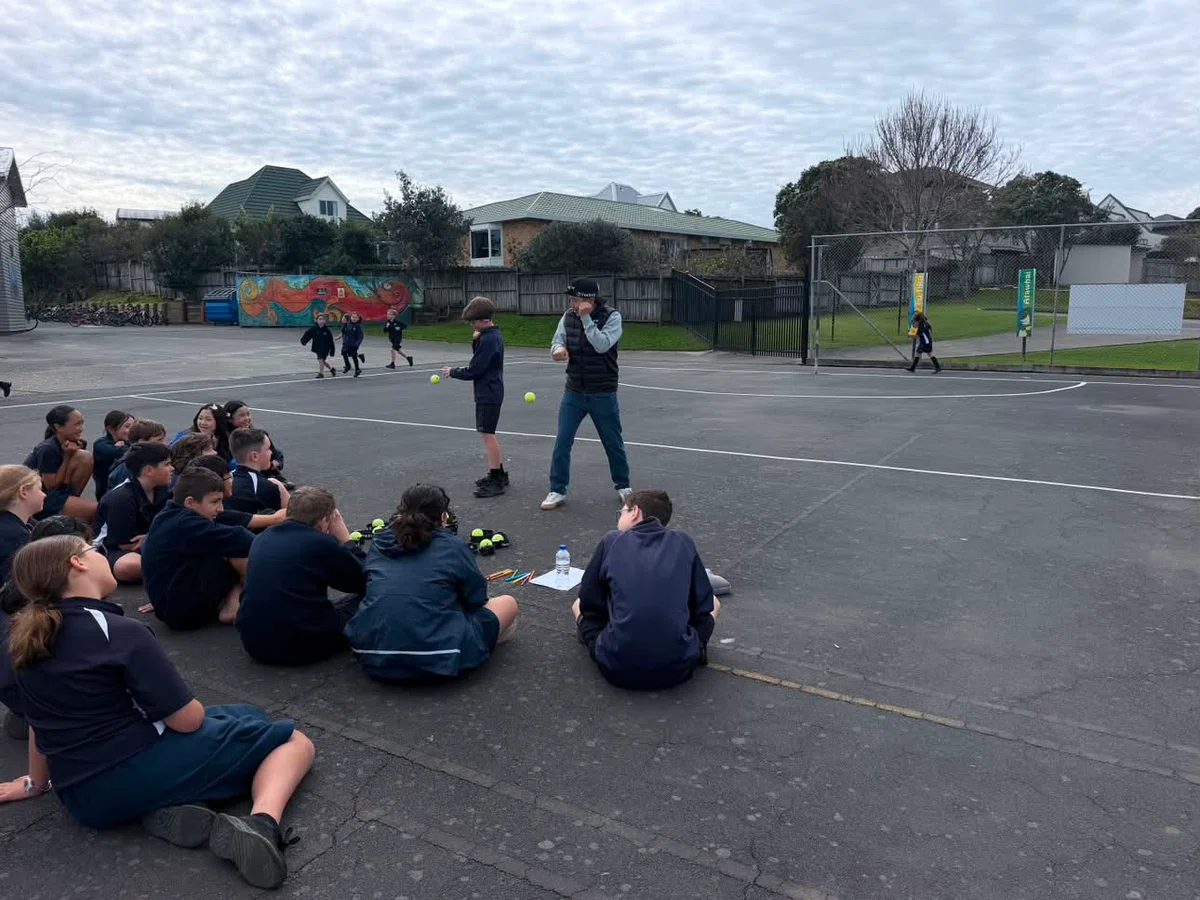
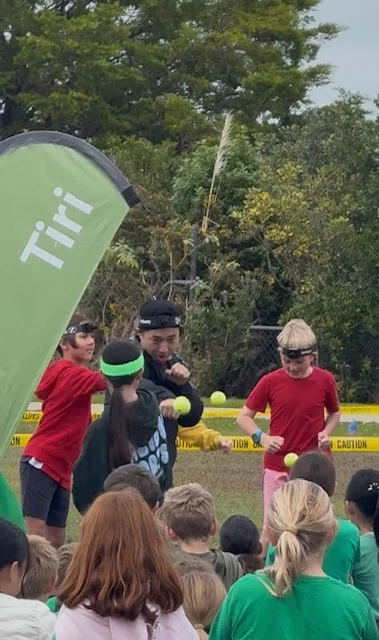
In her blog, Saho described how her son tried the TekXYZ boxing reflex ball at school and later received one as a gift, becoming absorbed in playing with it at home. She also recalled George's involvement in other school activities, including a school-wide cross-country event.
What particularly impressed Saho was how George combined his role as a parent with his business and contributions to the school community. His example gave her encouragement as she prepared to lead her own Japanese language and culture lessons for local students.
Although her encounter with TekXYZ was only one part of her experience, it contributed to a larger story about parental involvement, cultural exchange, and personal growth during her family's stay in New Zealand.
Below is an English translation of Saho's original Japanese article, published on October 11, 2026, sharing the experience in her own words.
About the Author
Saho Nakagawa is a Japanese-language teacher and mother who writes about language, learning, and parenting. Her background also includes corporate recruitment and staff development.
Part 5: Parent–Child Study Abroad—What Do Parents Do? My Challenge, and an Amazing Dad from China
By Saho Nakagawa | Originally published in Japanese on October 11, 2026
Now, for the fifth reason why studying abroad in New Zealand with my son was such a wonderful experience, I’d like to share what it was like for me as a parent.
When people hear “parent–child study abroad,” I imagine many wonder: What do the parents do? Some programs offer English classes for parents, while others simply involve parents accompanying their children. Ours was the latter. There was no special program arranged for parents.
But I had goals of my own, too: gaining experience overseas and improving my language skills. I wondered whether this trip could also be an opportunity for personal growth.
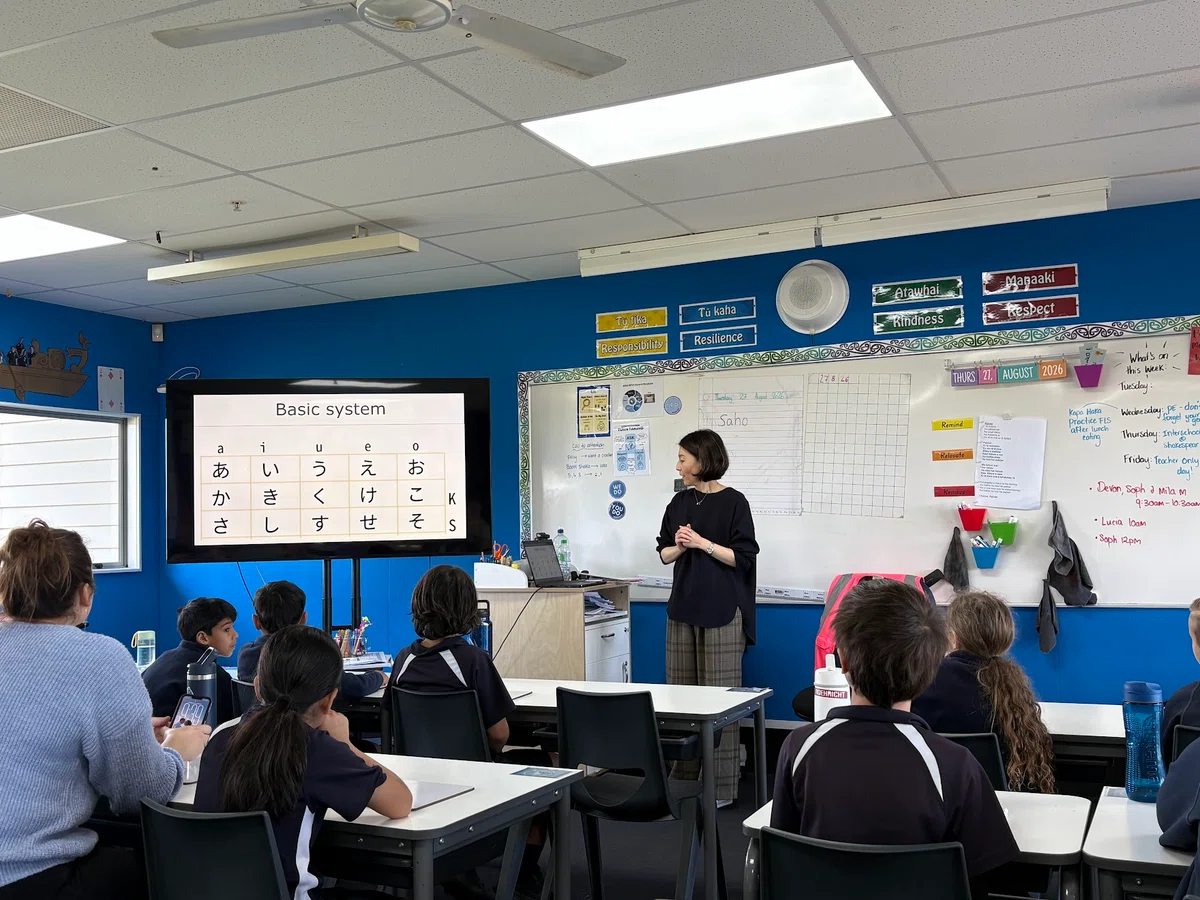
That was when our study-abroad agent mentioned the possibility of arranging a session in which parents could introduce the culture of their home countries. I knew I wanted to do it! Alongside preparing for my son’s time abroad, I began planning my own lessons before we even left Japan. I work as a Japanese-language teacher, teaching Japanese to people from other countries, so I was especially keen to share the language.
After lots of trial and error, and some coordination with the school once we arrived, I was able to teach Japanese at my son’s school!
My class was scheduled for the final week of our three-week stay. Yet from my son’s very first day, his teacher was already saying, “I’m looking forward to your class, too!” I was so moved by how warmly and generously she welcomed me.
And then the teacher said something else:
“Tomorrow, a dad from China is going to teach a boxing class!”
Wait … someone from China? Teaching boxing? To primary-school children?!
Did I hear that correctly? Was my English listening comprehension letting me down?!
I was bewildered. So what was going on?
It turned out that the father of a student studying abroad from China was the founder of a brand called TekXYZ. He had given the children a chance to try training with his company’s boxing reflex ball as part of their PE class!
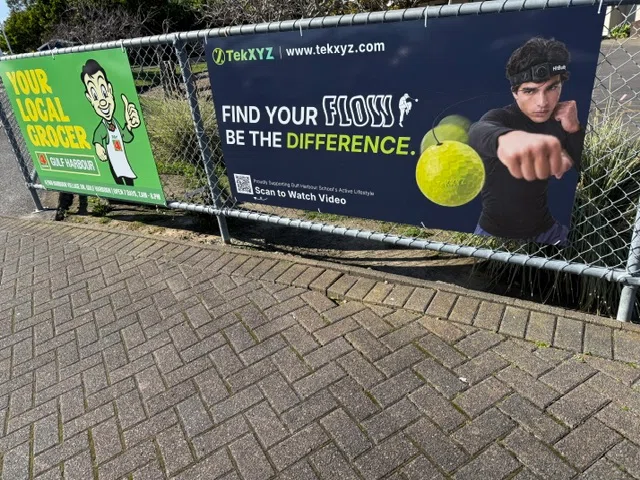
He was sending his own children abroad to study, while also running a business, supporting the school as a sponsor, promoting his products, and giving gifts to the children. His children’s education, his business, and a contribution to the community—all at once! What an amazing person!
He even appeared at the opening event for the school-wide cross-country race. He seemed almost like a member of the school staff.
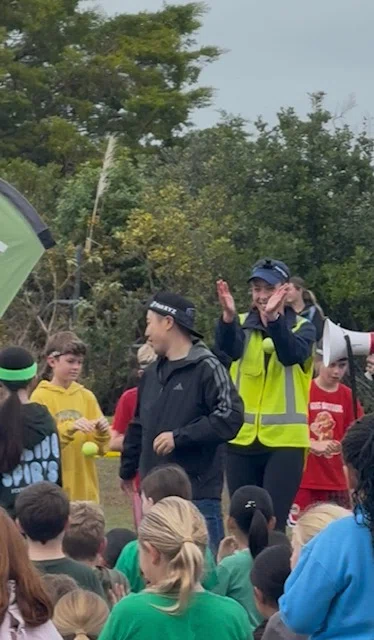
I remember thinking, “There really are some incredible dads out there in the world!” I was so happy that I happened to meet him at school and got the chance to talk with him.
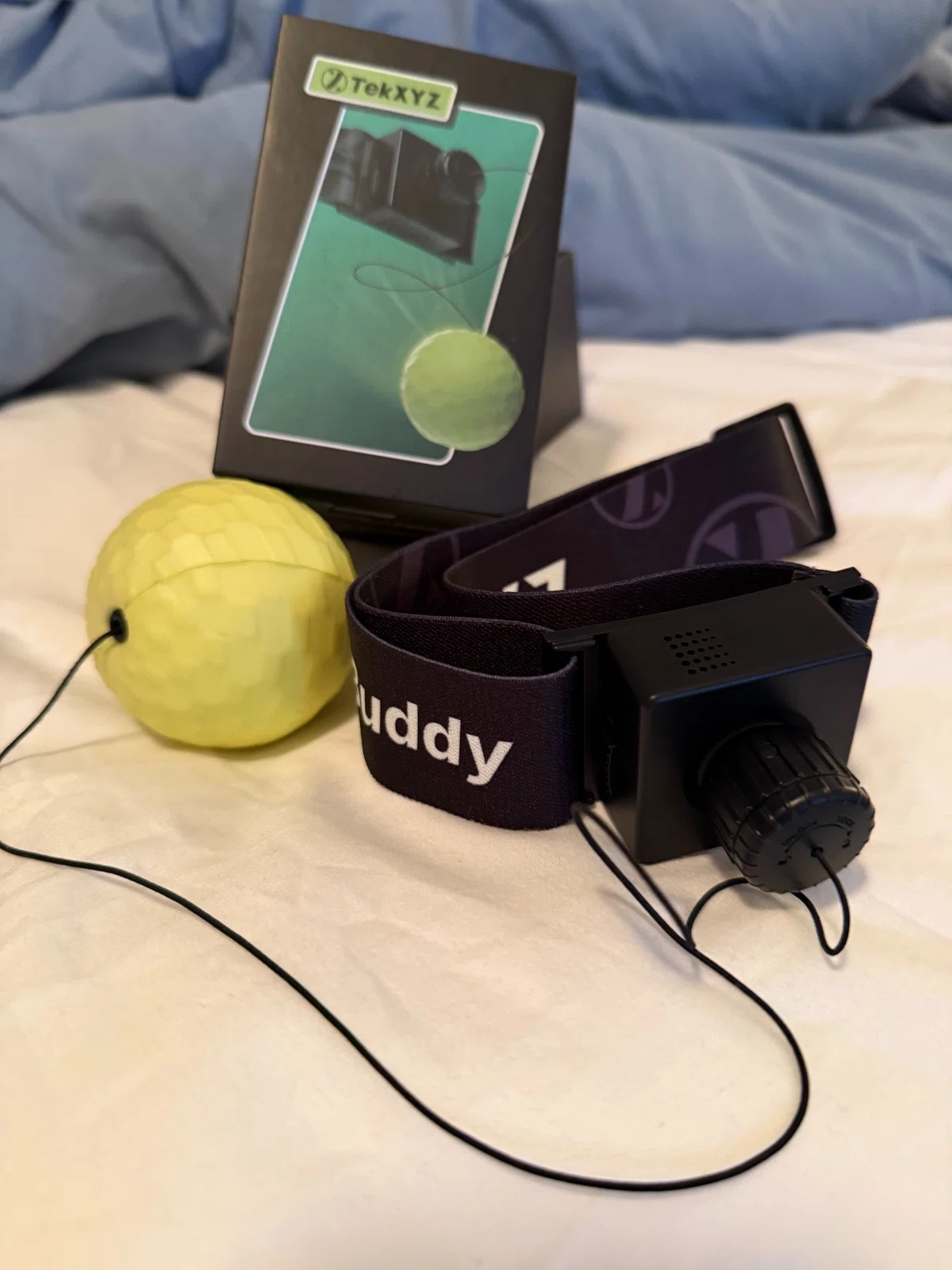
Seeing a dad like that gave me courage.
Now, let me tell you about how I prepared for my own lessons and what I actually did.
When the idea of parents introducing their home cultures first came up, not long after we began considering the trip, I thought that origami might go over well with primary-school children.
So I tried running an origami session at an international exchange event in Japan. But I found that people from other countries differed a lot in how unfamiliar, difficult, or enjoyable they found origami. I began to feel that it might be hard to do with a large group. I also asked people from overseas living in Japan for other ideas and kept experimenting.
I was still trying to decide what to teach right up until we left for New Zealand. As I packed, chose which Japanese foods to bring, and thought about souvenirs, the reality of travelling from Japan to New Zealand began to sink in. Gradually, my ideas for the lessons changed, too.
I began to think that Japanese culture—what makes something feel distinctly Japanese—might be found in very ordinary things and everyday experiences.
For example, instead of sharing facts that anyone could easily look up online, what if I gave the children a real experience of something Japanese primary-school students do?
“Stand up, bow, sit down”—the familiar routine at the beginning of a Japanese lesson.
That was one of the ideas I came up with.
Why do Japanese people bow?
In some cultures, people greet each other with handshakes or hugs. In Japan, people often avoid physical contact, maintain some distance, and bow.
Once we arrived in New Zealand, I saw high-school friends hugging each other warmly on a bus just to say goodbye. I also saw a Māori greeting in a book I bought, with people touching their foreheads together.

Seeing these differences firsthand made me realize just how much our ideas of what is “normal” can vary. My feeling that this could make an interesting lesson grew into certainty.
Because I taught during our third week in New Zealand, I could also share things that had surprised me or that I had learned for the first time since arriving. I hope the children, their teachers, and I were able to learn about one another’s cultures together.
I also brought in materials that Japanese primary-school children actually use, including kanji practice books, tests, and illustrated school lunch menus.
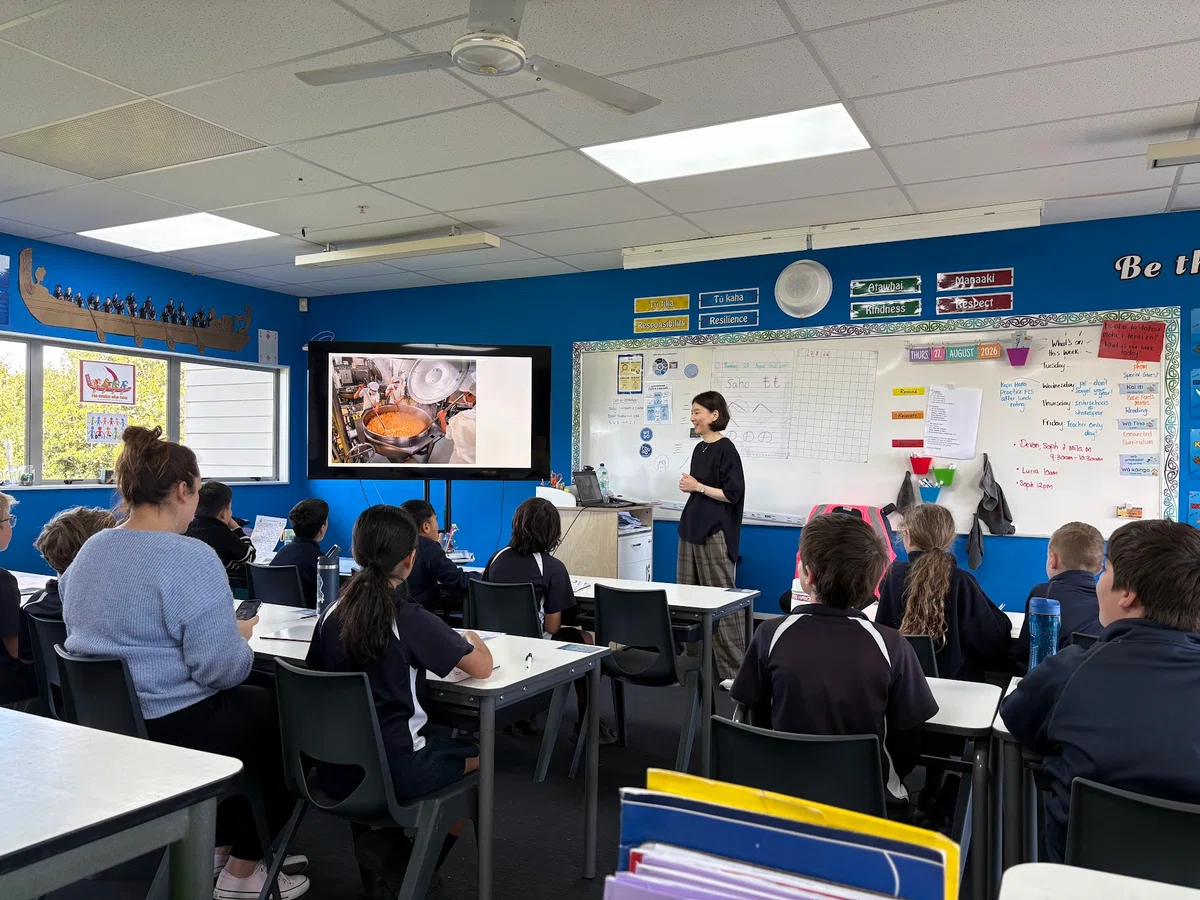
I built my lessons around taking a fresh look at things that we Japanese people normally take for granted.
I introduced hiragana, katakana, and kanji. We tried drawing henohenomoheji—a face made from Japanese characters—and writing some simple kanji together.
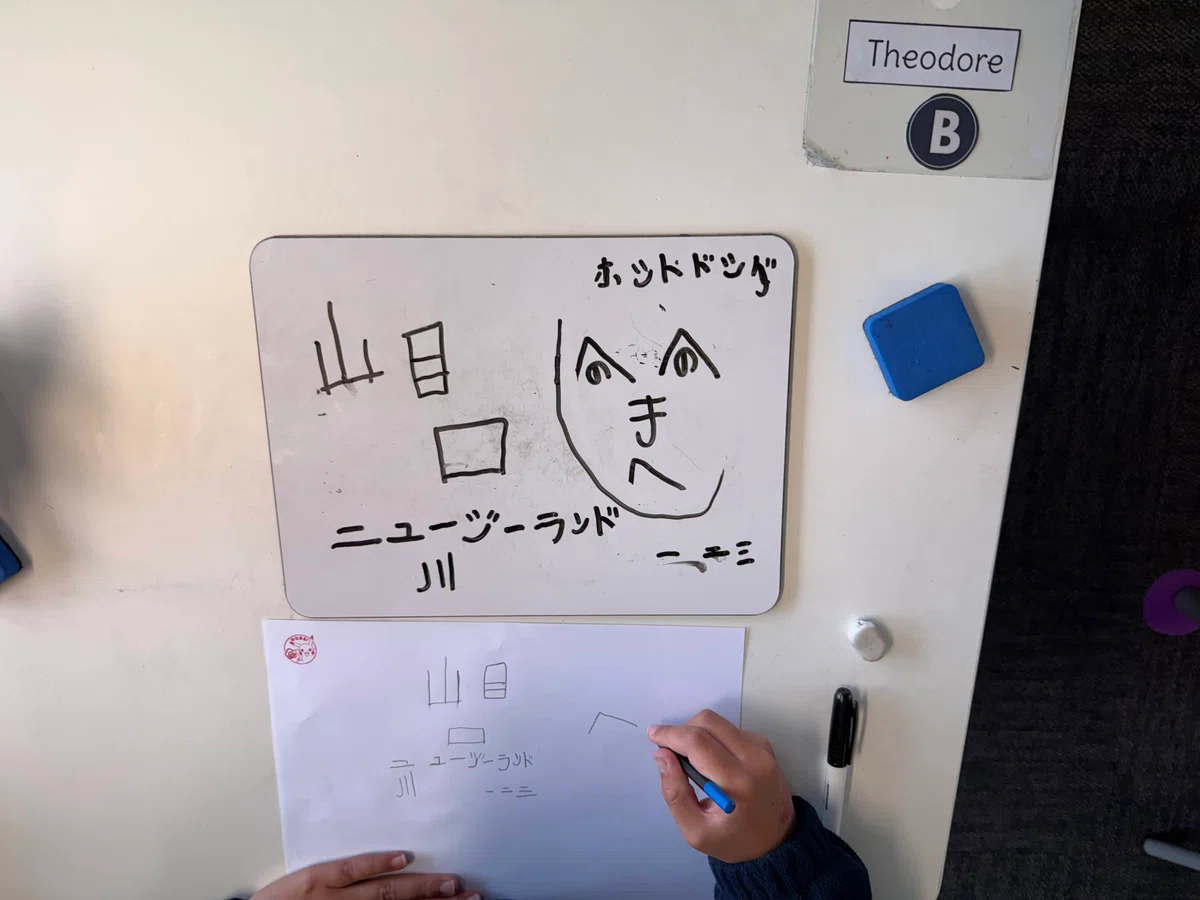
Once the lessons got underway, the children were incredibly curious. They eagerly tried things I hadn’t even asked them to do, and they kept writing more and more Japanese!
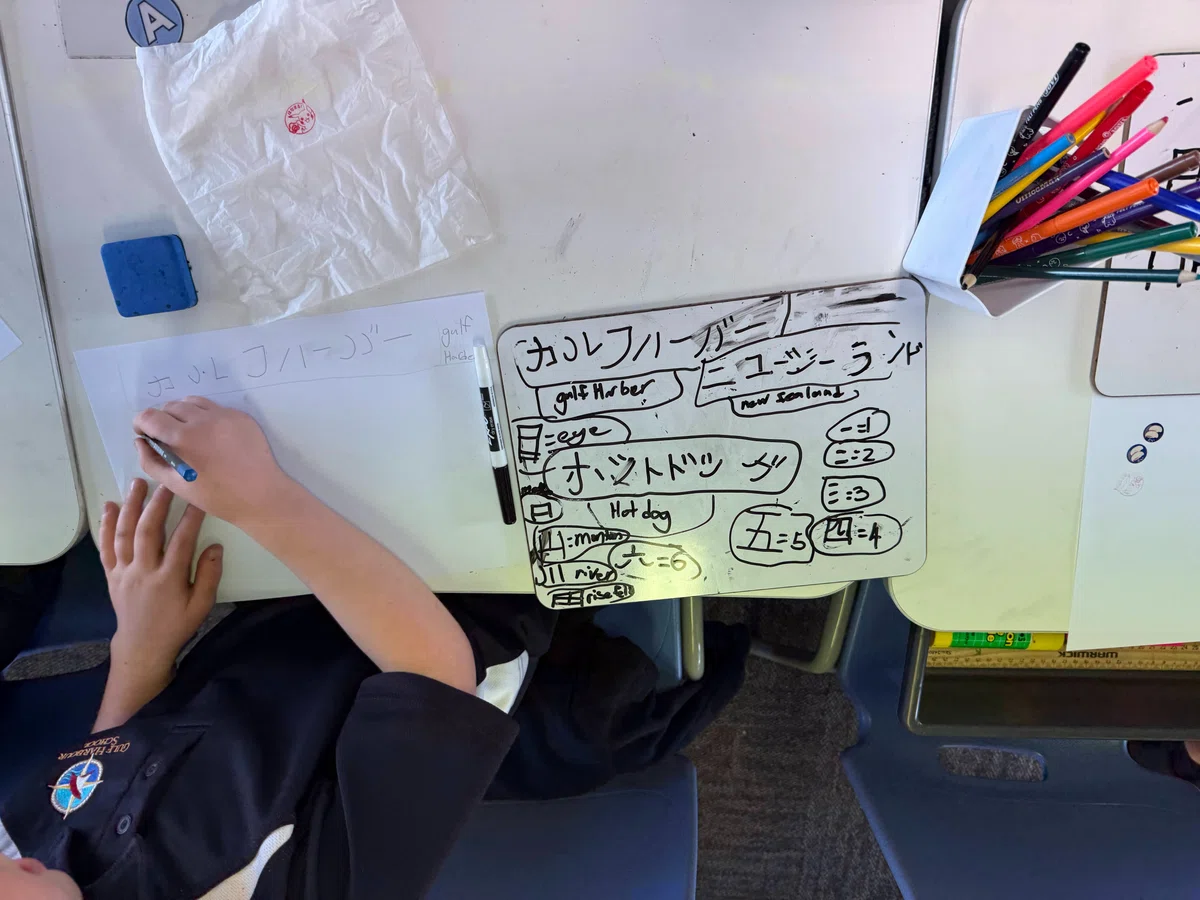
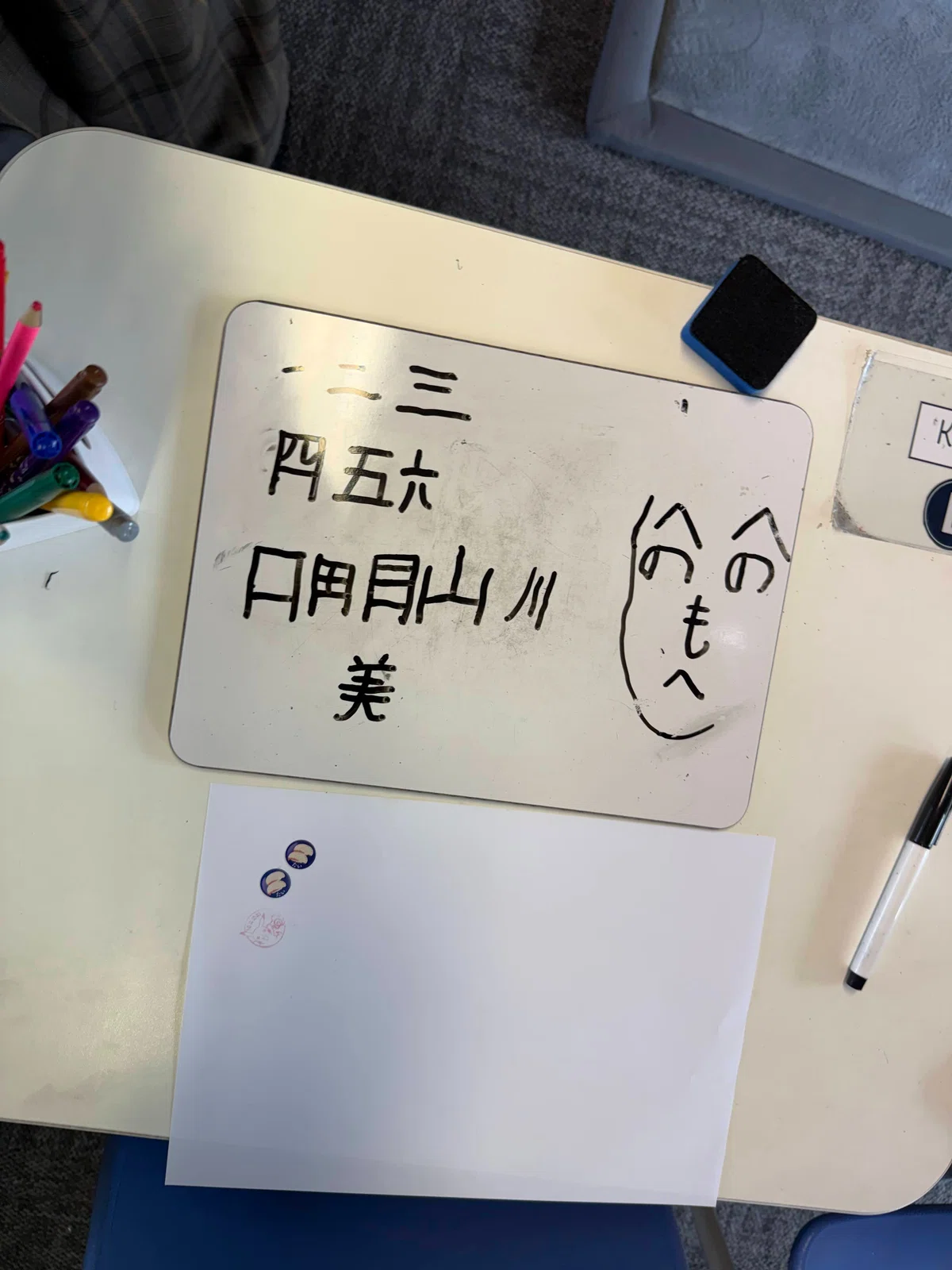
To finish, I stamped their work with a Pikachu stamp as a sign that they had become “Japan Masters.” They were delighted!
From preparing in Japan to the days we spent in New Zealand and finally teaching the lessons, I learned so much myself. Above all, being able to connect closely with the students and teachers and enjoy school life alongside my own child made it a truly wonderful experience.
Parent–child study abroad: What do parents do?
My answer is this:
Doing something hands-on is far more rewarding than just studying passively!
And what you choose to do is up to you!
If you want to introduce Japan, I don’t think you need to come up with anything particularly extraordinary.
The first step is to recognize how much “Japaneseness” is already present in the everyday things Japanese people do and the familiar things all around us.
That was another important lesson this parent–child study-abroad experience taught me.
Beyond classroom and school activities, I hear there are many accessible volunteer opportunities in New Zealand, such as helping with community tree-planting. If you are considering studying abroad with your child, I would definitely recommend asking about activities that parents can take part in, too.
The warm, open-hearted people of New Zealand welcomed both me and my son so generously. I was also encouraged by parents who give their all to raising their children and work hard to create a better world for them. Thanks to them, I was able to take on a challenge of my own.
And that was the fifth reason why our summer parent–child study-abroad experience in New Zealand was so wonderful! (^▽^)
About the original story: Written in Japanese by Saho Nakagawa and first published on note.com on October 11, 2026.
Leave a comment
This site is protected by hCaptcha and the hCaptcha Privacy Policy and Terms of Service apply.